The Brain
The brain has two hemispheres and a bridge that connects them. Here's how BIT works with each area.
Hemispheres & the corpus callosum
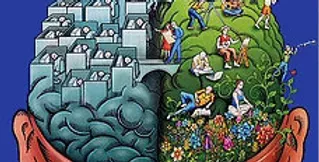
The logic hemisphere is responsible for logical tasks like simple math, rhythm, and telling time. The gestalt hemisphere (a German word for "whole picture") handles identifying color, aesthetics and arrangement, emotional recognition, and more. Most activities, like spelling or reading, require both hemispheres, and the corpus callosum is the bridge that connects them. It has two main parts: one that runs the muscles of the body (the neuromuscular level) and one that does the thinking (the cortical level). BIT addresses these three important areas in the first few hours of treatment, optimizing brain function right away. Most people report their brain "feels clean and clear" after this first session.

The limbic system
The limbic system is the physiological and emotional center of the brain. It makes and retrieves memories and houses "reward or punishment centers" critical to learning, because the motivation to learn is based on reward or punishment. It also regulates autonomous functions like heartbeat, sweating, taste, blood pressure, and hunger. BIT can re-set the brain's natural motivation and drive to learn — locating deep levels of emotional stress and relieving symptoms like sensitivity to lights and emotions, fear of failure or success, and lack of organizational skills.
Memory
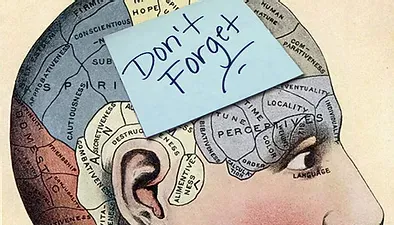
Memory is a complex function of the brain. Short-term, long-term and working memory only function if the senses take in information correctly and the retrieval systems retrieve it correctly. BIT addresses all of these areas. Working memory is the workspace where we manipulate and process information, particularly when learning something new. Successful learning requires functional working memory, and BIT can address even these complex areas. Brain Integration cannot, however, address Alzheimer's disease.

Balance, body & physical health
The vestibular system governs how well we balance; the corpus callosum governs how the brain uses the body. Together they control how physically active a body can be — in sports, school, or at home. The vestibular system consists of semicircular canals within the inner ear that give the brain sensory information about motion, equilibrium, and spatial orientation, much like the accelerometer in your smartphone. A malfunctioning vestibular system shows up as poor balance, dizziness, or easily becoming lost — and BIT can improve your ability to function in these areas.

Muscle ReActivation
A very exciting part of BIT. A practitioner can address physical issues like shoulder and back problems, knees and hips, ankles and wrists. Often people suffer for years with symptoms after injuries that never seem to go away. Just a few hours of Muscle ReActivation can address those lingering issues and help you regain what you thought was lost. People with no discernible injuries often report feeling more stable, strong and capable afterward. These changes have nothing to do with working out and everything to do with how well the brain uses the muscles. Results happen right away.

Eye muscles & processing
Malfunctioning eye muscles can affect eye-hand coordination, memory, and reading ability. If all muscles work properly, your eyes should move smoothly to each position, track side-to-side, change focal point, and rotate. You can check this at home by having someone hold an object at arm's length while you follow it. If your eyes appear jumpy or out of sync, you might benefit from BIT. Emotional or physical trauma can reduce the effectiveness of one or more muscles — and a misaligned sphenoid bone can pull harder on some eye muscles than others.
Auditory processing
BIT addresses auditory processing by focusing on four main areas of the brain. The anterior temporal lobes and hippocampal complexes integrate information from different brain areas, especially for memory. Wernicke's area coordinates sound, sight, and thought to create our train of thought and speech. Broca's area converts that information into the motor movements that create speech. The auditory interpretative point plays a key role in interpreting what has been heard.
Dyslexia & deep level switching
Deep level switching (DLS) occurs when the brain routes information incorrectly. Right/left: information intended for the right hemisphere goes to the left and vice versa, typically presenting as extra processing time and loss of information. Front/back: a hard time letting go of the past — holding grudges or unresolved issues. Top/bottom: difficulty pulling out of an emotional response to execute a rational one. After all deep level switching is corrected, the practitioner reactivates the corpus callosum so the hemispheres communicate properly.

Coordination
Crawling is vitally important to brain development because it teaches our left and right hemispheres to work in concert — moving the right arm with the left leg is cross-lateral movement. Sometimes this skill is never learned, which keeps the two sides of the brain from communicating effectively. People who never mastered it can often be identified by how they walk: hands in pockets or at their sides, or less commonly moving the same-side arm and leg together. BIT can correct this and improve communication between the two sides of the brain.
Ready to get started?
Call, text, or email to book your session. Ruth is happy to answer questions before you commit.